Before You Touch the Desmos Calculator, Do This One Thing
I took the SAT with a pencil and not nearly enough fingers and toes to count on—so I developed the one habit that makes every Desmos technique actually work.
7 min read
 Kevin Barrett
I took the SAT with a pencil and not nearly enough fingers and toes to count on. No graphing calculator, no Desmos, no app that drew the parabola for me. So I developed a habit out of pure necessity — and it turned out to be the most valuable thing the test ever taught me.
Before I calculated anything, I estimated. I'd look at a problem and ask: roughly what's this answer going to be? Around 40? Somewhere near zero? Bigger than 100 or smaller than 1? I wasn't trying to be precise. I was trying to be close — because, let's be honest, I wasn't putting anyone on the moon. I just needed to understand the question well enough to know the neighborhood the answer lived in.
And here's what I discovered: by the time I'd estimated, I usually already understood the problem. Often I practically knew the answer before I did a single calculation.
Published on June 24, 2026
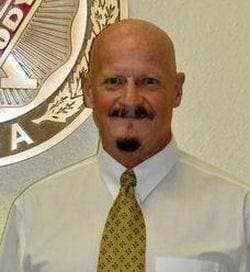
Kevin Barrett
Creatrepreneur, Owner at KJ Barrett & Associates, Owner at The Creatrepreneur
Qoollege.com Strategist and Board of Advisors
About Me
Creatrepreneur Pioneer | Global Innovator in Education & Business | Transforming Learning & Growth for Over 35 Years
Summary
As a lifelong learner and pioneer of Creatrepreneurship, he has dedicated over 35 years to transforming education and business through innovative solutions. His journey spans teaching diverse subjects at a private high school, coaching multiple sports, and consulting with a global clientele—from Fortune 500 companies to startups like Qoollege.com, where he serves on the Board of Advisors.
His business career started with working for 3M. There he had multiple positions in Manufacturing, Research & Development, Marketing, Business Development and International. This diverse experience reflects his commitment to fostering growth and innovation across industries and cultures.
At the heart of his approach is the SOULutions Framework—Shared Humanity, Overcoming Trauma, Unity of Purpose, and Long-Term Interdependency. This philosophy drives his work in developing cutting-edge educational programs and business strategies that foster sustainable growth and meaningful impact. Through KJ Barrett & Associates, he has helped businesses worldwide implement AI-driven solutions, optimize sales and marketing strategies, and build customer loyalty ladders. His Creatrepreneurial mindset, blending creativity with entrepreneurship, has been instrumental in developing new products and services that address evolving market needs.
That habit is more valuable today than it was then — precisely because you now have a tool that will happily think for you if you let it. So before I give you the Desmos techniques (and they're genuinely good), let me give you the thing that makes them work.
The digital SAT's built-in Desmos calculator is powerful. It graphs equations, finds intersections, runs regressions, computes statistics. Used well, it saves time and prevents errors, and I'll show you how in a moment.
But notice what every one of those features does: it offers to let you stop thinking. Graph it instead of solving it. Slide the variable instead of reasoning about it. Let the regression find the line so you don't have to understand the relationship. All technically correct. All genuinely useful. And all quietly dangerous if you reach for them before you understand the question — because then the tool isn't helping you think. It's thinking instead of you.
Here's the problem with that. A calculator gives you an answer; it does not give you the judgment to know whether the answer is sane. If you graph an equation and misread the screen, Desmos will confidently hand you a wrong number, and you'll write it down — because you never formed an expectation of what the answer should be. You outsourced not just the arithmetic, but the part of you that catches mistakes.
Estimation is how you keep that part of you switched on.
The move is simple, and it costs you about ten seconds per problem:
Before you touch the calculator, ask: roughly what should this answer be?
Look at the question. Picture the shape of the answer. Is it positive or negative? Big or small? Should the line be steep or shallow, the parabola open up or down? You're not solving yet — you're understanding. You're forming an expectation.
Then use Desmos to get precise. And when its answer comes back, you have something priceless: a way to check it. If you estimated "around 40" and Desmos says 38.5, beautiful — you understood the problem and the tool confirmed it. But if you estimated "around 40" and the screen says 4,000, you just caught an error that the student next to you — the one who clicked without thinking — is about to write down as their final answer.
That's the whole secret. Estimation makes you the check on the machine. Understanding first, tool second, always.
With that habit in place, here are the three skills genuinely worth mastering. Notice that each works best after you've understood the question, not instead of understanding it.
See the pattern? In all three, the tool serves the understanding. It never replaces it.
Here's the part to carry with you, and it's bigger than any test.
We sometimes forget why math is important. Yes, precision matters — don't underestimate it. But precision without understanding is just confident wrongness. The deeper skill math is quietly teaching you is the one almost no one names: the ability to look at a problem, grasp what it's really asking, and form a judgment about what a sensible answer looks like before you reach for the machine that gives you the exact one.
That skill is about to be the most important one you own. You're entering a world where every answer is one click, one prompt, one tool away. The calculators are only getting more powerful. And the people who thrive won't be the ones who can click fastest — they'll be the ones who can look at whatever the machine spits out and say, with quiet confidence, "that's not right." That judgment comes from understanding the question first. It comes from estimation. It comes from keeping your own mind switched on while the tool does the heavy lifting.
The calculator is a wonderful servant and a terrible master. Learn to use Desmos brilliantly — and never let it think for you.
Estimate before every problem. For one full practice section, write a rough guess of each answer before calculating anything. Train the instinct.
Then learn the tool. Bookmark desmos.com/practice and select "College Board Tests" to use the exact SAT version. Drill one technique a day: graphing to solve, sliders, statistics functions.
Use estimation as your error-catcher. On a timed practice section, every time Desmos gives you an answer, ask: "Is this in the neighborhood I expected?" Catch the mismatches.
Build the judgment of when not to use it. Some questions are faster with mental math. Knowing which is which is the real mastery — and it only comes from understanding the question first.
When you want to practice this in a realistic, timed environment — using Desmos on official-style questions with explanations that build the why, not just the answer — Qoollege's adaptive SAT prep is built for exactly that. But the habit comes first: understand the question, predict the answer, then let the tool make it precise.
Because the goal was never to calculate faster. It was to think clearly — and then use a brilliant tool to confirm what your thinking already told you. That's a skill you'll carry long after the SAT is a distant memory.
A note on specifics: the digital SAT, the Bluebook™ app, and the Desmos test version update periodically. Always confirm current calculator features and policies on the official College Board site before test day.
As a “Life Long Learner” he has taken 50 Plus continuing education programs from top-tier universities, covering a wide range of subjects. Education and learning is one of his passions.
Another of his passions is contributing back into the community. He has served on the Board of Directors at the YMCA and on the Greater Tampa YMCA oversight committee, with a focus on helping kids realize their potential.
In education, he has pioneered programs that integrate NLP, Hypnosis, The Silva Method, and binaural beats to enhance learning outcomes. As a teacher and coach, he has applied these techniques to empower students and athletes, achieving remarkable results in both academic and athletic performance.
He is a multiple sport coach with Back to Back State Championships in football, four State Championships in AAU basketball qualifying for Nationals, and experience as a Soccer Coach for Boys and Girls Varsity and Middle School, a Track Coach, a Cross Country Coach. He also has in-depth knowledge of coaching swimming, tennis, and rugby.
His role as a Board Advisor for Qoollege.com, an exciting edtech startup, allows him to merge his passion for education with cutting-edge innovation, creating solutions that make learning more accessible and effective.
With a career spanning Australia, the USA, Europe, and extensive travel across the Pacific Rim, Asia, Africa, and South America, he brings a truly global perspective to every project. This international experience has been invaluable in developing culturally-sensitive and universally applicable solutions. He is excited to share these insights and collaborate with forward-thinkers.